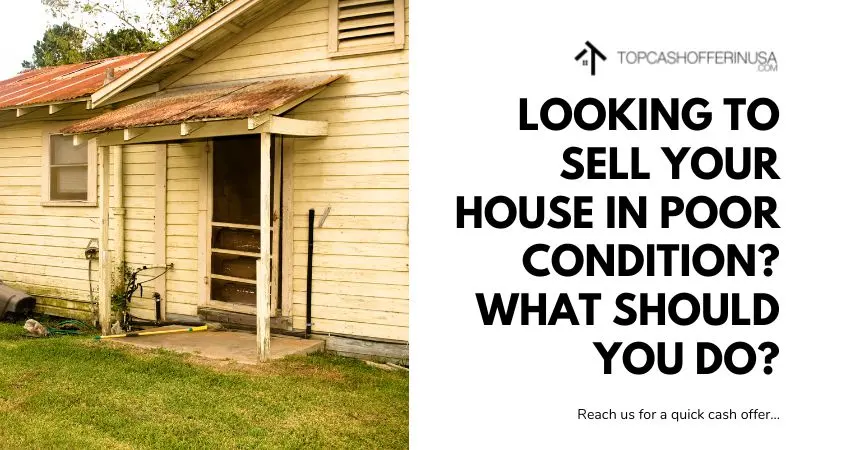
Selling a house “as-is” in California means you sell it in its current condition and don’t make repairs before closing. It is a common way to sell a house with an old roof, foundation cracks, water damage or outdated plumbing and wiring, an inherited house you don’t want to fix up, or a rental you want to be done with. But as-is does not mean “no questions asked.” California has some of the most detailed seller disclosure rules in the country, and an as-is sale does not switch them off. Buyers can still inspect, and the way you sell decides how much the condition will cost you.
This guide explains what as-is means in California, the disclosures you still owe, your three ways to sell, the costs to expect, what to do if you are behind on payments, a worked example and a checklist. It is general information, not legal advice; a California real estate attorney or your escrow officer can confirm what applies to your sale.
What “as-is” means in California
An as-is sale means you are not agreeing to make repairs. The buyer takes the house in the condition it is in on the day the contract is signed. In most California purchase contracts, the buyer still gets a set number of days to investigate the property, with inspections, reports and a review of your disclosures, and can cancel during that period if they don’t like what they find. They may also ask for a lower price or a repair credit. You can say no, but the buyer can then walk away.
When you sell to a cash buyer, the buyer’s contract may look different, but read it with the same questions in mind: does it say you are not making repairs, how many days does the buyer have to inspect and cancel, and is the earnest money refundable during that time?
What you still have to disclose
Selling as-is does not let you stay silent about problems you know about. Three things matter most:
- The Real Estate Transfer Disclosure Statement (TDS). California Civil Code section 1102 and the sections after it require most sellers of a home to give the buyer a TDS, a form that asks about the condition of the house and its systems. Civil Code section 1102.1 states that delivery of the TDS may not be waived in an as-is sale, citing the court decision in Loughrin v. Superior Court (1993).
- The Natural Hazard Disclosure Statement (NHD). Under Civil Code section 1103 and the sections after it, the seller tells the buyer whether the property is in any of six kinds of hazard areas: a FEMA special flood hazard area (Zone A or V), an area of potential flooding from a dam failure, a high or very high fire hazard severity zone, a wildland area with substantial forest fire risk, an earthquake fault zone, or a seismic hazard zone (landslide or liquefaction). Most sellers order a report from a natural hazard disclosure company to fill it in.
- Known material facts. Beyond the forms, a seller must disclose known facts that a buyer would consider important to the decision to buy, such as a leaking roof, past flooding, structural problems or ongoing neighborhood issues. An as-is clause does not change that.
Some sales are exempt from the TDS under Civil Code section 1102.2, including sales ordered by a probate court in the administration of an estate, foreclosure sales, transfers by a fiduciary administering a decedent’s estate, trust, guardianship or conservatorship, transfers between co-owners, and transfers to a spouse or close relatives. One catch: the trust exemption does not apply when the trustee is a person who owned or lived in the house within the past year, which is common with family living trusts. Even an exempt seller should still disclose problems they know about.
The safest approach is simple: put the problems you know about in writing. A buyer who is pricing in the condition anyway gains nothing from a hidden defect, and full disclosure protects you from a claim after closing.
Inspections and renegotiation
An as-is buyer still inspects, usually with a general home inspector and often with a roofer, a pest inspector or a foundation specialist. In California, a termite (wood-destroying pest) report is common, and older houses often turn up dry rot or fungus damage. During the investigation period, the buyer may come back with a list and ask for a lower price.
That is the real risk of an as-is listing: the inspection report becomes a renegotiation, and a buyer who can’t get a loan on the house may cancel. The fewer surprises the buyer finds, the less room there is to retrade, which is another reason to disclose fully up front and to share any reports you already have.
Three ways to sell a California house as-is
1. List as-is with a real estate agent
You reach the most buyers and may get the highest price if the house is in fair shape. But most buyers use a mortgage, and the lender orders its own appraisal. A house with major roof, foundation, plumbing or electrical problems can struggle to get financed, and showings, inspections and the investigation period all take time. You also pay the commission you negotiate with your agent.
2. Sell it yourself (for sale by owner)
You skip the listing commission but take on the marketing, showings, the contract and every disclosure form yourself, and you face the same financing and inspection issues. See selling without a realtor if you are weighing this route.
3. Sell to a cash buyer
A cash buyer prices the repairs into the offer, so there is no lender appraisal holding up the sale and usually no repair negotiation after the inspection. The offer is typically lower than a retail listing price, but you skip repairs, showings and commissions, and you choose the closing date. This is often the fastest route for a house that needs major work, has tenants in it, or is tied to a deadline such as a foreclosure sale date.
What it costs to sell as-is in California
- County documentary transfer tax. Counties charge 55 cents per $500 of value (or fraction of $500) under Revenue and Taxation Code section 11911, which works out to $1.10 per $1,000, or $660 on a $600,000 sale.
- City transfer tax, in some cities. Some cities add their own tax on top. The City of Los Angeles, for example, charges $2.25 per $500, plus an extra 4% of the full price on sales above $5,400,000 and 5.5% at or above $10,900,000 (thresholds effective July 1, 2026). Ask your escrow officer what applies to your address, and check your contract for who pays.
- Escrow, title and closing costs. Escrow fees, title insurance and recording costs are split as your contract and local custom say.
- Payoffs and prorations. Your mortgage, any liens and your share of property taxes are settled from the sale at closing.
- Disclosure reports. A natural hazard disclosure report, and any inspection reports you choose to order.
- Commissions. Only if you list with an agent. There is no agent commission when you sell directly to a cash buyer through us.
A worked example
Here is a simple illustration with round numbers (not a real sale). Say a house would sell for about $600,000 fully fixed up, and it needs a new roof, a re-pipe and foundation repairs, which contractors estimate at $70,000.
- Fix, then list: you pay the $70,000 up front, wait for permits and the work, then list. After the commission, about $660 in county transfer tax (more in a city with its own tax), escrow and title costs, and the months of mortgage, property taxes, insurance and utilities while you repair and sell, your net is well below $600,000, and you carry the risk if the repairs run over or the buyer still finds something.
- List as-is: buyers subtract the repairs and a margin for their trouble, and some can’t get a loan on the house at all. Expect a lower price, a longer wait and a likely renegotiation during the investigation period.
- Sell to a cash buyer: the offer is lower than the fixed-up price, but there are no repairs, no commission and no holding months, and the number you agree to is close to what you take home.
The right choice depends on your cash, your time and the house. Compare the net amount you would actually receive in each case, not the headline price. Our post on renovating vs selling as-is goes deeper on the trade-off.
If you are behind on payments
Most California home foreclosures are non-judicial, carried out by a trustee under the power of sale in the deed of trust, with no lawsuit. The process starts when a notice of default is recorded. The lender has to wait three months before recording a notice of sale, and the notice of sale must go out at least 20 days before the auction, so the sale can’t happen sooner than about three months and 20 days after the notice of default. You can reinstate the loan by catching up until five business days before the sale, and after a non-judicial sale there is no right to buy the house back.
Until the sale you still own the house and can sell it, pay off the loan at closing and keep what is left. That window is shorter than in states where every foreclosure goes through court, so don’t wait for the sale date: escrow, title work and payoff letters take time. See selling a house in foreclosure.
Checklist: selling your California house as-is
- Write down the problems you know about: roof age, leaks, past flooding, mold, foundation, plumbing, electrical, termites, unpermitted work.
- Fill in the Transfer Disclosure Statement, unless your sale is exempt, and give it to the buyer.
- Order a natural hazard disclosure report and give the buyer the NHD statement.
- Use a contract that says you are not making repairs, and note how many days the buyer has to investigate and cancel.
- Gather your mortgage payoff, HOA details, and any lien or property tax information.
- Ask your escrow officer which county and city transfer taxes apply to your address.
- Get at least one cash offer and one agent’s estimate, and compare the net amounts after taxes and costs.
- Close through an independent escrow or title company you can call yourself, and confirm wire instructions by phone. See how to check a cash buyer.
Frequently asked questions
Do I have to make repairs to sell my house in California?
No. You can sell the house in its current condition. The buyer can still inspect, may ask for a lower price and can usually cancel during the investigation period, but you don’t have to agree to repairs.
Does selling as-is mean I don’t have to disclose anything?
No. California law says the Transfer Disclosure Statement can’t be waived in an as-is sale, the Natural Hazard Disclosure Statement still applies, and you must disclose known material facts about the house.
Do I need a Transfer Disclosure Statement for an inherited house?
Sales ordered by a probate court and transfers by a fiduciary administering a decedent’s estate or trust are exempt from the TDS. A trustee who owned or lived in the house within the past year is not exempt. Either way, you should still disclose problems you know about. See selling an inherited property.
How much is the transfer tax when I sell a house in California?
The county tax is 55 cents per $500, or $1.10 per $1,000 of the price. Some cities, such as Los Angeles, add their own tax on top. Your contract says whether you or the buyer pays it.
Can I sell my California house as-is during a divorce?
Usually yes, as long as everyone on the title signs. For what changes while a divorce case is open, read selling a house during a divorce in California.
Selling a house in California as-is? We connect California sellers with local cash buyers who make a fair, no-obligation offer on the house as it stands, usually within 24 hours. See we buy houses in California or the local pages for Los Angeles and Sacramento, then get your free cash offer or call (727) 208-1229. Selling in another state? Read how to sell a house as-is in Texas or in Florida.